Beyond the Airline seniority List: Eight Flight Decks That Pay the Bills Differently
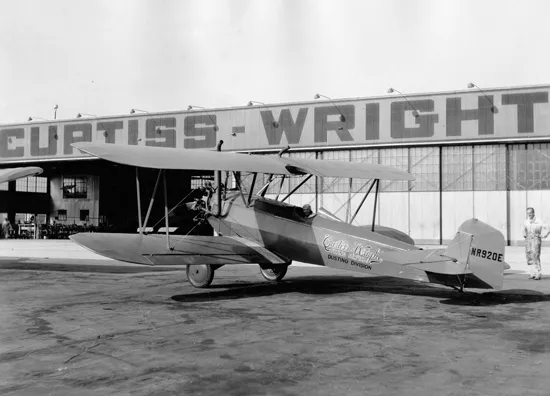
Photo: SDASM Archives, No restrictions, via Wikimedia Commons
Ask most people what a pilot does for a living and they'll picture a regional jet and a four-bar epaulet. The airline path is a fine one — but it is not the only one, and for many pilots it isn't even the best one. If the seniority list feels out of reach, or the thought of a decade of reserve schedules in a crash pad gives you pause, it's worth knowing what else the right seat can look like.
At Helang Flying Academy, we counsel students on the full map of aviation careers, not just the one on the poster. Here are eight of them, with the honest numbers and tradeoffs attached.
Aerial Firefighting
Tanker and lead-plane pilots are the specialists of the wildfire season, which across the American West now stretches most of the year. Entry typically requires an ATP, 1,500+ hours, and significant low-level mountain experience — many come from agricultural aviation or helicopter work. Seasonal contracts can pay $80,000 to well over $200,000 for experienced tanker captains, but the work is seasonal, physically demanding, and carries genuine risk.
Agricultural Aviation
Crop dusting is one of the oldest pilot jobs in America and still one of the most overlooked. Ag operators will often hire low-time pilots into ground and loading roles, with a path to the seat after 500–1,000 hours and an ag-specific training course. First-year ag pilots commonly earn $50,000–$70,000, with established operators clearing six figures. The tradeoff: early mornings, chemical exposure protocols, and very low-level flying where margins are thin.
Medevac and Air Ambulance
Fixed-wing and rotor medical transport runs around the clock, and demand is steady. Rotor-wing jobs usually want 1,000–1,500 helicopter hours plus instrument rating; fixed-wing positions often align with ATP minimums. Pay typically runs $60,000–$110,000, with night and weather decision-making as the core skill. It's meaningful work with real autonomy — and real fatigue management challenges.
Banner and Aerial Advertising
The humble banner tow is one of the few jobs that will genuinely hire a 300-hour pilot. Pay is modest — often $25 to $50 per flight hour — but it builds exactly the kind of slow, precise, tailwheel-adjacent experience that makes stronger pilots. Many treat it as a paid hour-builder rather than a destination.
Ferry and Delivery Flying
When an aircraft needs to move — new deliveries, repositioning, sales — ferry pilots do it, often in single-pilot IFR conditions across oceans and continents. It's contract work: irregular, sometimes spectacular, sometimes miserable. Compensation varies wildly, from expenses-plus to $500+ per day for turbine and international deliveries.
Flight Instructing
Yes, it's the classic first job, but it deserves better than a shrug. CFI pay has risen sharply; many academies now offer $30–$60 per hour with multi-engine and instrument instructor add-ons pushing higher. More importantly, instruction is where judgment is forged — the pilots who teach well tend to fly well forever.
Corporate and Charter
Part 91 corporate flying and Part 135 charter work offer airline-adjacent pay — $70,000 to $200,000+ depending on the aircraft — with schedules that can be either brutal or enviable depending on the owner. A type rating and turbine time open most doors, and many corporate seats come with far less scheduling upheaval than the regionals.
The Surprising Ones
Three careers people rarely imagine: skydiving operations, where jump-pilots build turbine time fast at modest pay; pipeline and aerial survey, low, methodical flying that suits patient, precise pilots; and fish spotting and wildlife survey in coastal regions, which pays modestly but offers some of the most unusual flying hours in the logbook.
Choosing Your Own Runway
None of this is an argument against the airlines. It's an argument against assuming there's only one runway. The commercial certificate is a license to solve problems from the air — and American aviation has more problems to solve than most flight school brochures admit. Figure out which kind of flying you actually want to wake up for, then build the hours and ratings that path demands. The wings you earn are the same either way; what you do with them is up to you.