Five Forecasts That Should Ground You Before You Ever Touch the Runway
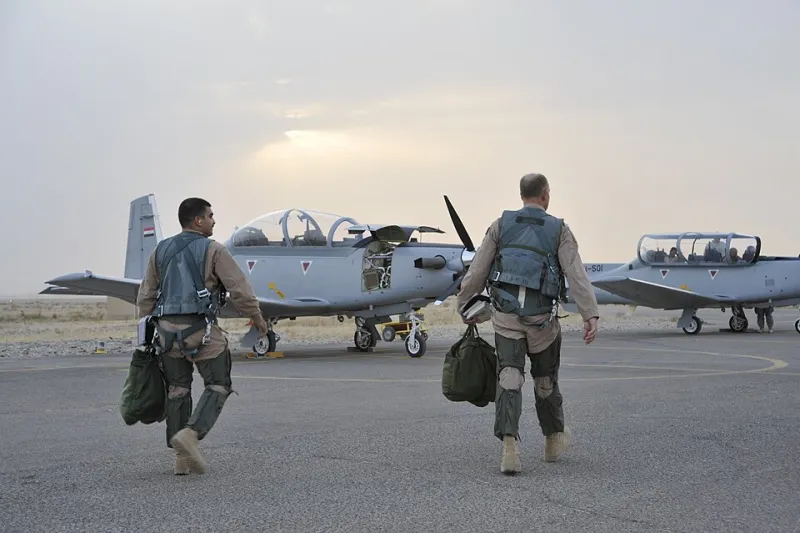
Photo: NATO Training Mission-Afghanistan MC3 Jared Walker/Public Affairs, KAIA, Public domain, via Wikimedia Commons
Every student pilot eventually meets The Morning. The forecast is gray, the METAR has letters in it you don't fully trust, and a voice in your head asks whether today is a fly day or a coffee-and-ground-school day. For many new aviators, weather is the single most intimidating subject in training—more than radio work, more than the checkride itself.
It doesn't have to be. Weather briefing is a skill, and like every skill in aviation, it responds to structure. Below are the five weather decisions that most often ground a new pilot—and, when ignored, most often endanger one—followed by a method for building your own go/no-go discipline.
1. Ceiling and Visibility: The Student's First Hard Line
For a student or private pilot, this is the decision with the clearest rules. Under Visual Flight Rules, your limits aren't suggestions; they're regulations. Below 1,200 feet AGL in most of the country, you need at least one statute mile of visibility and clear of clouds in Class G, with stricter requirements in Class E and controlled airspace. Your school's own minimums are typically more conservative—and rightly so.
The practical habit: read the METAR, then read the TAF, and ask one question—will the ceiling and visibility be legal AND comfortable for my certificate level at the time I plan to fly? A 700-foot overcast may be technically irrelevant to a VFR flight planned at 2,500 feet, but a lowering ceiling is a trend, and trends are what trap pilots who only looked at a snapshot.
2. Surface Wind and Gust Spread
Calm morning, 15-knot afternoon—that daily rhythm catches countless students off guard. The number to watch isn't just wind speed; it's the gust spread. A METAR reading 27010G22KT means the wind may swing 12 knots in seconds, and crosswind limits on a light trainer arrive faster than most students expect.
Know your aircraft's demonstrated crosswind component, know your own, and set your personal limit well below the aircraft's. A student who can handle a 10-knot direct crosswind should not be soloing in one at 18 knots. There is no trophy for proving otherwise.
3. Convective Activity: The Non-Negotiable One
Here is the decision with no gray area. Thunderstorms in the vicinity—especially embedded or developing cells—mean no-go for any VFR student, full stop. Convective SIGMETs, radar returns with tops above the freezing level, towering cumulus on a hot summer afternoon over the plains: these are not challenges to manage but appointments to keep on the ground.
In much of the United States, particularly across the Gulf states and the Plains, summer convection builds with almost mechanical predictability. Fly early. Brief the Convective Outlook. Treat any cell within roughly 20 miles as a reason to reschedule, because the turbulence, downdrafts, and wind shear around a storm extend far beyond its visible core.
4. Icing and Freezing Levels
Student pilots rarely fly into icing conditions—but they can fly beneath clouds that are producing them, and freezing rain can coat an aircraft on the ramp. In winter, check the freezing level in the Winds and Temperatures Aloft forecast and the Forecast Icing Product. If the temperature-dewpoint spread is tight, if clouds are stratified and low, and if the freezing level sits near your planned altitude, the answer is to wait, drive, or study.
5. Density Altitude: The Invisible Performance Thief
The least dramatic item on this list may be the most quietly dangerous. A 95-degree afternoon at a 2,500-foot field in the Southwest can produce a density altitude above 5,000 feet. Your trainer's takeoff roll stretches, climb performance sags, and the numbers in the POH you skimmed no longer apply.
Before every summer flight, compute density altitude honestly and recalculate your takeoff and climb performance. The runway that felt generous at 8 a.m. can feel very short at 2 p.m.
Building Your Personal Go/No-Go Checklist
Knowledge becomes discipline through routine. Before every flight—lesson, solo, or eventually revenue flight—write down and answer the same five questions:
- Are ceiling and visibility legal and comfortable for my certificate level, and are they trending better or worse?
- Is the wind, including gust spread, within my personal crosswind limits?
- Is there convective activity forecast or observed anywhere near my route or practice area?
- Are icing or freezing-level conditions a factor today?
- Does my performance margin hold up at today's density altitude?
If any answer is uncertain, the decision defaults to no-go—and a no-go is never a failure. It is the exercise of the same aeronautical decision-making the FAA has spent decades trying to teach. The pilots who build this habit as students carry it, unchanged, into airline cockpits and charter operations.
From Chore to Confidence
Somewhere along the way, weather briefing stops being a box you check and becomes a conversation you have with the sky. You start reading clouds the way you read traffic. You notice the wind sock before you notice the fuel price. The METAR stops looking like code and starts looking like a story about your afternoon.
That confidence is earned the same way every skill at this academy is earned: through repetition, structure, and respect for the environment you fly in. The sky will always make the final call. Your job is simply to read it well enough that the call never surprises you.
Your wings are waiting. Earn them here—and check the weather first.