Grounded, Not Finished: How to Pick Your Training Back Up After a Long Pause
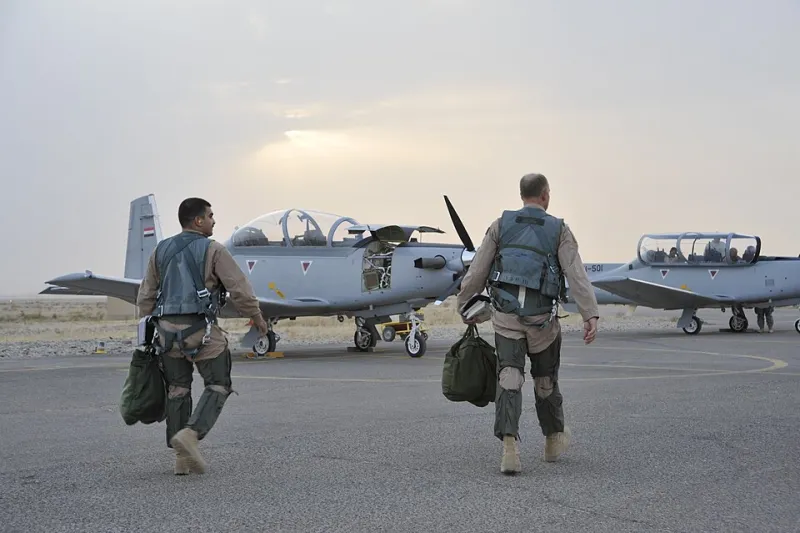
Photo: U.S. Air Force 316WPA by Senior Airman Perry Aston, Public domain, via Wikimedia Commons
Every flight school has them: the students who vanished. The one who soloed twice and then stopped showing up. The one who was three hours from a checkride when a divorce, a layoff, or a pandemic closed the door. Their logbooks sit in desk drawers from Seattle to Tampa, holding twelve hours or forty, waiting.
If that logbook is yours, here is the truth the industry rarely says out loud: coming back is normal, and it is far more common than you think. According to FAA data, the majority of people who start flight training never finish on their first attempt. The sky will still be there when you are ready. What matters is how you return.
Why Training Stalls — and Why It Rarely Stays Stalled
The reasons students step away tend to fall into four buckets. Weather and scheduling disruptions can stretch a syllabus that should take six months into eighteen. Financial setbacks force hard choices between rent and rental fees. Medical issues, even minor ones, can suspend a student certificate longer than anyone expects. And then there is motivation — the slow erosion that happens when training stops feeling like progress and starts feeling like a treadmill.
None of these disqualify you. The FAA does not penalize gaps in training. Your written exam results remain valid for two years, and your logged hours never expire. A student who paused in 2021 and returns today is treated as a student, not a defector. In practice, flight instructors tend to see returning pilots as some of their most rewarding students: they arrive with perspective, humility, and a clearer sense of why they wanted to fly in the first place.
What Decays Fastest When You Step Away
Skill fade is real, but it is not uniform. Understanding what erodes first helps you and your instructor build a smart re-entry plan.
Procedural memory fades quickest. Checklists, radio calls, and flows live in a part of the brain that needs repetition. Expect your first few pattern laps to feel clunky, especially the ones involving communication. If you were uncomfortable on the radio before your pause, assume you will need to rebuild that comfort deliberately.
Aircraft feel fades second. The fine motor sense of a stabilized approach — the sight picture, the flare timing, the subtle pressure on the controls — dulls within weeks of not flying. This is normal and recovers faster than you fear, but it recovers with an instructor aboard, not solo.
Aeronautical knowledge fades slowest. The mental model you built in ground school — airspace rules, weather theory, systems knowledge — is surprisingly durable, especially if you have stayed engaged as an aviation enthusiast. Many returning students find the classroom side of their brain intact even when their hands are rusty.
The Return Flight: A Practical Re-Entry Plan
Do not book a solo. Book a review. The safest path back follows a predictable sequence:
First, request a full review with an instructor. Not a rental checkout — a genuine no-pressures flight where the goal is simply to see where you stand. Be honest about the gap. A good instructor will start with basic maneuvering, work through stalls and slow flight, and evaluate your landings before deciding what comes next.
Second, refresh the paperwork. Verify your medical certificate is current if one is required for your stage of training, confirm your student certificate is still valid, and check whether your written test results have lapsed. If you were close to a checkride, ask about the latest Airman Certification Standards — the practical test standards evolve, and you want to train to the current bar.
Third, rebuild on a compressed schedule. Ironically, returning students often progress faster the second time because they fly more frequently. Two or three lessons a week for a month will restore proficiency faster than the once-a-month pace that may have contributed to the stall in the first place. Momentum is a training tool. Use it.
Talking to a New Instructor Without the Shame Spiral
Many returning students change flight schools — a new job, a move, or simply wanting a fresh start. Walking into a new school and admitting you quit can feel like confessing a failure. Reframe it. Say plainly: "I trained for X hours, stopped because of [reason], and I'm ready to finish." No experienced flight instructor will blink. They have heard every version of this story, and most respect the honesty more than a polished resume.
One request worth making: ask the new instructor to fly with you before committing to a syllabus. The fit between student and instructor matters enormously, and a returning student deserves an instructor who treats the restart as a strategy session, not a remedial sentence.
The FAA's View: A Gap Is a Blank Page
Here is what surprises many returning students: regulators and examiners do not treat a training gap as a red flag. What the FAA cares about is current proficiency at the moment it matters — before a solo, before a checkride, before you carry passengers. The system is built around currency, not continuity. A student who returns, completes a thorough review, and demonstrates the required standards stands on exactly equal footing with someone who never paused.
In other words, the aviation world is less interested in the story of your absence than in the evidence of your readiness. That is a quietly generous philosophy, and it should give you permission to stop apologizing for the gap.
Your Wings Did Not Expire
At Helang Flying Academy, we tell returning students something simple: the airplane does not remember how long you were gone, and neither does the sky. What you built before — the knowledge, the judgment, the dream — is still in you. The rust is on the surface, and rust polishes off.
The worst outcome is not a slow restart or a few awkward landings. The worst outcome is a logbook that stays in the drawer forever. Open it. Call a school. Book the review flight. The runway has not moved, and neither has your reason for wanting this.