Before You Sign Anything: The One-Hour Flight That Should Decide Where You Learn to Fly
Photo: Unknown authorUnknown author, Public domain, via Wikimedia Commons
Somewhere on a ramp in America this Saturday morning, a person who has dreamed about flying since childhood will hand a flight school $199, climb into a Cessna 172, and come back down an hour later with a grin that lasts a week. Most of them will sign up for training on the spot. Some of them should. Some of them should have looked a little closer first.
A discovery flight is usually sold as a joyride — and it is a genuinely unforgettable one. But if you are seriously considering flight training, that single hour in the air is the best consumer research you will ever buy. Here is how to treat it that way, from the moment you pull into the parking lot.
Before You Even Walk In
Do a little homework the night before. Look up the school on the FAA's database to confirm it operates legally, and skim reviews from actual students, not just five-star testimonials on the school's own site. Check the aircraft's N-number on the FAA registry; a well-maintained fleet has a paper trail.
Then show up ten minutes early. Punctuality is a two-way street in aviation, and how the front desk treats your time is a preview of how the whole operation runs.
What the First Fifteen Minutes Tell You
The discovery flight experience varies by school, but the structure is fairly standard: a brief ground introduction, a preflight walk-around of the aircraft, the flight itself, and a short debrief. Use each phase deliberately.
On the ground, notice the little things. Is the lobby clean? Are training materials organized? More importantly, watch how staff interact with current students. Do they know students by name? Is a lesson wrapping up on schedule, or is a frustrated student pacing by the window? Flight schools live or die on scheduling discipline, and the ramp tells the truth faster than any brochure.
When you meet your instructor, ask two questions before you ever leave the ground: 'How long have you been instructing, and what are you working toward?' Most instructors are building hours toward the airlines, which is completely normal — but an instructor two weeks from a regional airline interview may not be the long-term mentor you want. Ask how scheduling works and how students book aircraft. Vague answers here are worth remembering.
On the Ramp: Read the Fleet
The walk-around is your inspection, even if you do not know what to inspect. You are not looking for mechanical expertise; you are looking for a culture of maintenance.
Airplanes should look cared for — not concours-level, but not battered. Peeling paint and cracked interiors do not necessarily mean unsafe, but a fleet that looks neglected often is neglected. Ask when the aircraft you are flying had its hundred-hour inspection, and whether the school uses its own maintenance staff or contracts it out. Neither answer is wrong, but a school that cannot answer quickly has a problem worth noting.
In the Air: What You're Actually Evaluating
Legally, you can handle the controls as much as you like on a discovery flight — there is no requirement that you touch anything. But take the yoke when it is offered. Feel how the instructor communicates. A good instructor explains before doing, demonstrates calmly, and lets you make small, safe mistakes. A poor one grabs the controls, talks over you, or turns the hour into a personal joyride.
Pay attention to the radio, too. Listen to how your instructor communicates with the tower or on the common traffic advisory frequency. Discipline on the radio is a decent proxy for discipline everywhere else.
And note the honest moments. Does the instructor volunteer information about training costs, timelines, and drop-out rates without being asked? Or does the sales pitch only begin after the wheels are up?
The Debrief: Where the Real Interview Happens
After shutdown, you will typically sit down with someone about enrolling. This is your turn to interview them.
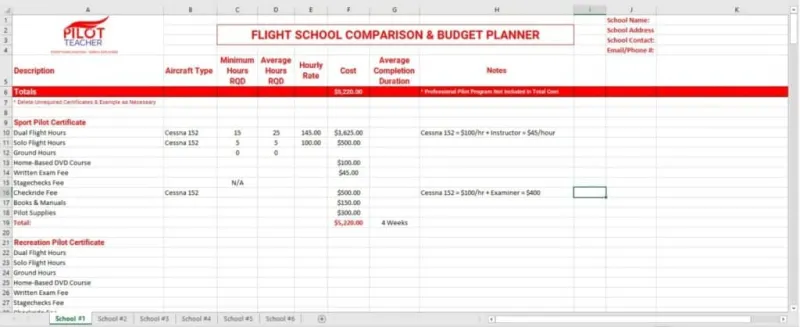
Ask for the full cost picture — aircraft rental, instructor time, ground instruction, medical exam, examiner fees, written test fees — in writing. Ask what percentage of students finish their private certificate, and how long the average student takes. Nationally, most students take 60 to 70 hours to reach the private checkride against the FAA minimum of 40, and a school that pretends otherwise is selling you a fantasy. Ask how billing works and whether you pay as you go or up front. In the wake of several high-profile flight school collapses in recent years, paying as you go is the safer default.
Finally, ask to see the training syllabus. A structured, written curriculum — whether Part 61 or Part 141 — signals an organized operation.
The Red Flags That Should Send You Elsewhere
Not every school deserves your $199, let alone your next sixty hours and ten thousand dollars. Walk away if you encounter any of the following:
- Pressure to prepay a large block of hours on day one
- Reluctance to put costs in writing
- Aircraft with expired or missing registration documents visible in the plane
- Instructors who badmouth other local schools rather than describing their own strengths
- No clear answer on insurance, or students being asked to sign unusual liability waivers without time to read them
- A schedule that only seems to work if you commit today
One Hour, One Honest Verdict
The best discovery flights end two ways: either you found your school, or you found out you need to keep looking. Both are wins. The only genuine loss is signing a training agreement an hour after your first landing because the adrenaline hadn't worn off yet.
Take the flight. Take the photos. Sleep on it. The sky is not going anywhere — and neither is the right flight school. When you are ready, the team at Helang Flying Academy will be glad to walk you through every one of these questions, whether you train with us or not. Your wings are waiting. Earn them here, on your terms.