Could You Pass Ground School Tonight? A 25-Question Pop Quiz for the Armchair Aviator
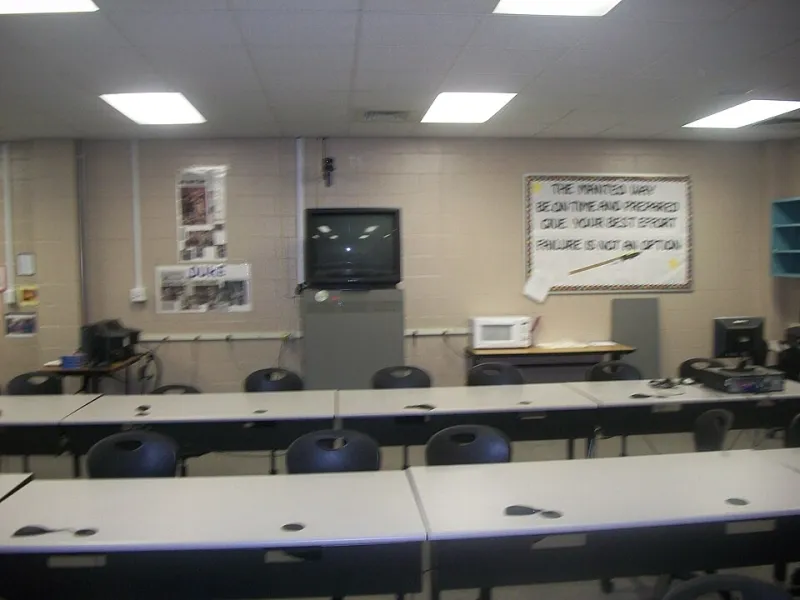
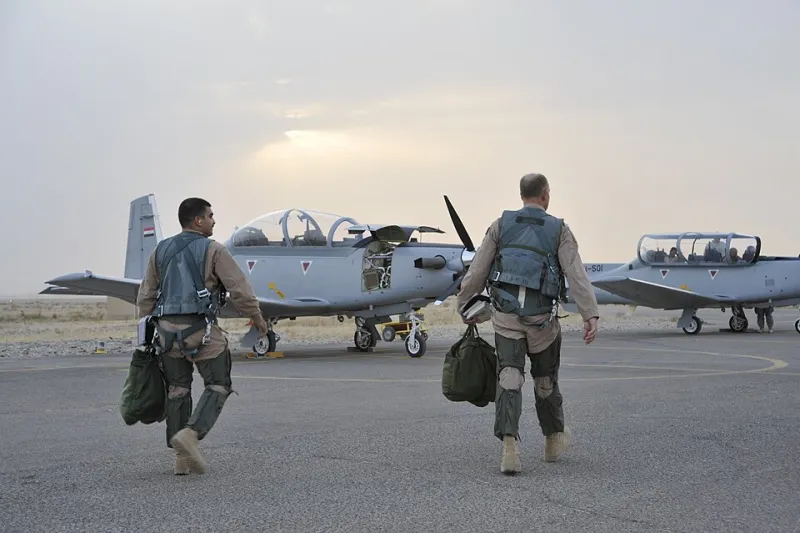
Photo: JohnSTEINBECK234, CC BY-SA 3.0, via Wikimedia Commons
Before any student at Helang Flying Academy touches a throttle, they spend hours in a classroom learning the invisible rules that keep thousands of aircraft from colliding over Nebraska every afternoon. Most people assume flying is about the stick and rudder. Ask any instructor and they'll tell you the truth: the written knowledge is where students are made or broken.
So consider this your invitation. Below are twenty-five concepts drawn from real private pilot ground school material — airspace, radio calls, weather minimums, and the odd bit of federal regulation. No pressure, no proctor, no $175 testing fee. Answer honestly, then scroll to the bottom to see how you did.
Round One: Airspace — The Invisible Real Estate
- What are the six basic classes of airspace in the National Airspace System?
- What altitude does Class E airspace typically begin above the ground?
- What is required to fly into Class B airspace — the busy zone around places like Atlanta or Denver?
- What is a "TFR," and why should a VFR pilot care about one over a stadium on game day?
- What does a dashed blue line on a sectional chart mean?
Round Two: Radio Calls — Talking the Talk
- What information must a pilot include in a call to a tower when requesting taxi clearance?
- When a controller says "hold short," what is the only acceptable response?
- What does it mean when ATC says "line up and wait"?
- What frequency would you use to announce your position at a small, uncontrolled field with no tower?
- Why do pilots read back hold-short instructions but not most altitude assignments below 18,000 feet?
Round Three: VFR Weather Minimums — When You Can Legally Fly
- In Class E airspace below 1,200 feet AGL during the day, what are the basic VFR visibility and cloud clearance requirements?
- What does "VFR" actually stand for, and what does it imply about how the pilot navigates?
- What is the special VFR rule, and when might a pilot use it?
- What are the daylight VFR minimums in Class G airspace below 1,200 feet AGL?
- What is the difference between a ceiling and a cloud layer?
Round Four: The Written Exam Wildcard Round
- What is the standard traffic pattern altitude at most airports, and why does it matter?
- What does the mnemonic "A-N-D" help pilots remember before flight?
- What are the required documents a pilot must carry in the aircraft (hint: remember your A-R-O-W)?
- What is a METAR, and how often is it issued?
- What does it mean when a runway holds a displaced threshold?
Round Five: Judgment — The Question That Isn't on the Test
- What is the single most cited cause of general aviation accidents?
- What is the "get-there-itis" phenomenon?
- What personal checklist should every pilot run before every flight, regardless of weather?
- Why do instructors insist that a student who is 90 percent ready for a checkride is not ready?
- What should you do if you realize, ten minutes into a flight, that conditions are worse than forecast?
How Did You Do? The Answer Key in Plain English
If you breezed through Rounds One and Two, you've either been studying or you've been spending too much time on live ATC streams — both are fine by us. The short answers:
Rounds One and Two. The airspace classes run A through G (that's question one). Class B requires an explicit clearance from ATC — no clearance, no entry. A TFR is a temporary flight restriction, and violating one over a packed NFL stadium is an excellent way to meet two federal agents. A dashed blue line marks Class D airspace. On the radio, "hold short" always gets a readback, because holding short of an active runway is quite literally a life-or-death instruction. At a nontowered field, pilots self-announce on the CTAF — the Common Traffic Advisory Frequency.
Round Three. Basic daytime VFR in Class E below 1,200 feet means three statute miles of visibility, 500 feet below clouds, 1,000 feet above, and 2,000 feet horizontal. VFR stands for Visual Flight Rules — you navigate by looking out the window, which is why clouds matter so much. Class G below 1,200 feet in daylight is the most permissive: one mile and clear of clouds.
Round Four. Traffic pattern altitude is typically 1,000 feet AGL. A-R-O-W: Airworthiness certificate, Registration, Operating limitations, Weight and balance. A METAR is an hourly aviation weather report. And yes, the A-N-D mnemonic — Airworthiness, Navigation, Documents — is the kind of thing you'll catch yourself reciting in the shower once training starts.
Round Five. Here's the round that doesn't appear on the FAA written test but decides careers. The leading cause of GA accidents is pilot error, most often in the form of poor aeronautical decision-making. "Get-there-itis" is the hazardous attitude that pushes pilots to press on into deteriorating conditions because the destination is close. And question twenty-five? The correct answer is the one that separates pilots from passengers: turn around, divert, and land — the destination will still be there tomorrow.
Curious What the Classroom Feels Like?
If you scored north of eighteen, you'd likely survive your first week of ground school with your ego intact. If you scored below ten, congratulations — you've just discovered exactly why flight training is worth doing with a structured academy behind you rather than a stack of YouTube videos.
Ground school isn't a hurdle between you and the fun part. It's the foundation that makes the fun part safe, legal, and repeatable. And the first time a controller issues you a real clearance and you read it back without hesitation, you'll understand why we made you memorize all of it.
Your wings are waiting. The homework comes first — and honestly, that's half the adventure.