The Debrief You Didn't Want Is the One That Saves Your Life
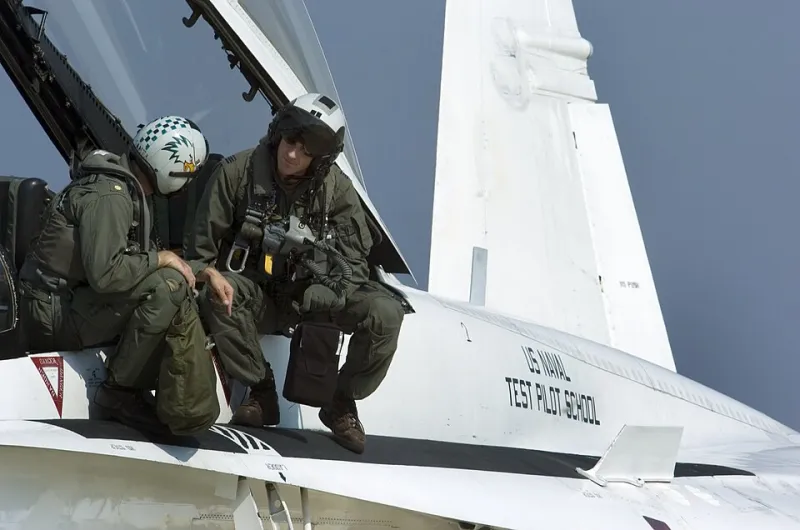
Photo: U.S. Navy photo by Photographer’s Mate 2nd Class Daniel J. McLain, Public domain, via Wikimedia Commons
Somewhere over the practice area, your instructor crossed their arms, watched you float your flare by fifteen feet, and said nothing until you were back on the ramp. Then came the sentence that ruined your afternoon: "We're going to need to work on your landings."
If you've trained at any American flight school—Helang included—you've probably met the instructor students privately call "hard." The one who debriefs like a prosecutor. The one who fails your stage check without apologizing. The one whose silence in the right seat feels louder than any radio call.
Here is the argument worth making: that instructor may be the best thing that ever happens to your flying.
The Myth of the Smiling Instructor
Popular culture has given us two caricatures of the flight instructor. The first is the drill sergeant—sunglasses, clipped sentences, a man who was clearly a Navy SOF in a previous life. The second is the friendly coach, endlessly encouraging, who tells you every landing is "getting there."
Both caricatures miss the point. Good instruction isn't about temperament; it's about honesty under stakes. The FAA's own practical test standards don't grade on effort. A landing that bounces is a landing that bounces, whether your instructor whispers or shouts about it. The best instructors understand that their job is to be the last filter between you and the day when nobody is in the right seat to catch your mistakes.
That means telling you the truth, plainly, even when the truth is discouraging.
Why Good Conflict Makes Good Pilots
Aviation safety research has spent decades confirming an uncomfortable fact: most accidents involve a pilot who overestimated their own skill. The chain of errors described in accident reports—from the classic accident chain model to modern human-factors studies—usually begins with a small discrepancy nobody challenged. A rushed preflight. A marginal weather call. A maneuver flown sloppily because "close enough" had never been called out.
Your instructor's blunt feedback is a designed interruption of that chain. A hard debrief after a failed maneuver does three things at once:
- It recalibrates your self-assessment. You learn that your internal gauge of "how I'm doing" runs optimistic, and you adjust.
- It normalizes criticism. If you get used to hearing hard feedback in the cockpit, you'll be able to hear it in an airline FSTD debrief, a checkride, a line check—without defensiveness clouding your judgment.
- It teaches you to critique yourself. The endgame of instruction is a pilot who conducts their own debrief before anyone else can.
Students who never experience this friction during training get their first taste of it during a checkride, a 121 interview, or worse—an emergency. Better to learn it at 3,000 feet over the practice area with a CFI beside you.
How to Receive Criticism Like a Professional
Reframing the tough instructor is one thing; taking the feedback is another. A few habits that separate students who grow from students who stall out:
Take notes in the debrief, not rebuttals. Your instinct after a rough flight is to explain. Resist it. Write down what was said, thank your instructor, and review it the next morning when your ego has gone to bed.
Ask the follow-up question. "You said my crosswind technique is weak—can you show me yours on the next one?" This converts criticism into instruction and signals maturity every instructor remembers.
Separate the sting from the substance. Sometimes delivery is clumsy. That's fine. Judge the feedback by whether it's accurate, not by how it felt.
Debrief yourself first. Before your instructor speaks, say what you think went wrong. Students who self-identify their errors learn faster and earn their instructor's respect immediately.
When Friction Becomes Something Else
None of this means you should tolerate genuine mistreatment. There is a line between demanding and demeaning, and you should know where it sits.
Seek a different instructor if:
- Feedback targets you as a person rather than your flying.
- You feel unsafe or too intimidated to ask questions in the aircraft.
- Your progress has flatlined for weeks with no clear plan to fix it.
- The instructor cancels repeatedly, shows up unprepared, or uses your lesson time as personal flight-hour padding.
Criticism should leave you challenged. It should never leave you afraid to fly. A professional instructor—tough or gentle—creates an environment where hard truths can land safely. If yours doesn't, changing instructors isn't quitting; it's the same aeronautical decision-making you're being taught, applied to your training.
Earn the Wings
Every pilot certificate the FAA issues says the same thing in the fine print: this person was found proficient, not praised. The path to that word—proficient—runs directly through the debriefs you didn't want, the maneuvers you failed, and the instructor who refused to let "close enough" slide.
Your instructor is not your enemy. Your instructor is the first honest mirror you'll ever sit in front of. The students who learn to love that reflection are the ones who show up at the airlines, at the charter operation, at the left seat—still asking, after every flight, the only question that matters: what can I do better tomorrow?
Your wings are waiting. Earn them here—debrief included.