Three Hours of Silence: What Your First Long Solo Actually Teaches You

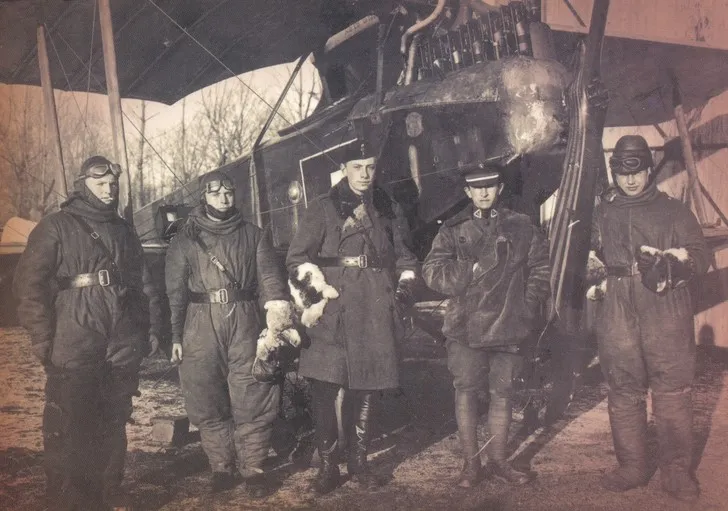
Photo: Photograph by Clem Rutter, Rochester, Kent. (www.clemrutter.net)., CC BY-SA 3.0, via Wikimedia Commons
Somewhere between your third and fifth hour of solo cross-country time, something shifts. The radio calls become routine. The checkpoints arrive when you expect them. And somewhere over a stretch of farmland you've never seen from this altitude, you realize the airplane is entirely yours — and so is every decision that follows.
At Helang Flying Academy, we tell every student the same thing: the long solo cross-country is not a box to check. It is the moment the dream of flight stops being borrowed from your instructor and becomes genuinely yours. You earn your wings one quiet, lonely hour at a time, and no flight demonstrates that better than this one.
The Requirement, and Why It Exists
Under FAR Part 61, private pilot applicants must log a solo cross-country of at least 150 nautical miles with full-stop landings at three points along the route. Part 141 programs structure it slightly differently, but the spirit is identical: the FAA wants evidence that you can plan, execute, and complete a real journey — alone, without coaching, without a safety net.
Your instructor signs the endorsement, checks the weather briefing you pulled, and then steps out of the airplane. What happens next is entirely on you.
Preparation Is the Whole Game
The students who struggle on long solos almost never struggle with stick-and-rudder skills. They struggle with preparation. Before you ever crank the engine, you should have:
- A complete fuel plan. Know your burn rate, your usable fuel, and your legal reserves — and then build in a margin. A crosswind on leg two that adds fifteen minutes matters when you planned to land with forty-five minutes of fuel.
- Weather contingencies. What is your go/no-go line for ceilings? What happens if the marine layer pushes in earlier than forecast? Decide your abort criteria on the ground, when you're calm, not in the air when you're committed.
- A diversion plan for every leg. Identify two or three suitable airports along each segment. If the destination goes sideways, you already know where you're pointing the nose.
- Your documents and currency. Medical certificate, logbook endorsements, aircraft paperwork. Small things, but solo means no one else is catching them.
Getting Lost, Gracefully
Here is a truth few flight schools say out loud: at some point on a long solo, most pilots get at least briefly uncertain of their position. The mark of a good pilot isn't never being unsure — it's what you do next.
The discipline is simple and old: if you're lost, slow down. Reduce power, hold a heading, climb if it helps you see landmarks, and work the problem. Pilotage and dead reckoning haven't been retired just because a tablet is mounted to the yoke. And if you are truly disoriented, there is no shame in the time-honored move — squawk 7700 is extreme, but asking ATC for assistance is not. Flight service and radar facilities have talked plenty of nervous students onto the ground. The system exists to help you.
The Psychology of the Empty Right Seat
Ask any pilot about their first long solo and you'll get a story. The radio call they fumbled. The moment the sun dropped and the whole valley turned gold. The landing they greased with nobody there to see it.
The psychological weight is real, and it's worth naming. For the first time, there is no instructor to catch a mistake, no second opinion on a marginal call, no one to ask. That solitude is precisely the point. Aviation's judgment — the ability to say not today to marginal weather, to choose the extra fuel stop, to fly the airplane first and everything else second — cannot be taught from the right seat. It can only be discovered when the right seat is empty.
Practical Notes From Our Instructors
A few hard-earned tips we pass along before every solo endorsement here at the academy:
- Fly the airplane first. Charts, tablets, and checklists can wait ten seconds. The airplane cannot.
- Talk to yourself out loud. Verbalizing "fuel check — one hour remaining, on plan" keeps your head in the loop when there's no one to talk to.
- Don't chase perfection on landings. Three full-stop landings at unfamiliar fields means three different surfaces, three different patterns. Fly the numbers, accept the landing you get, taxi back.
- Log honestly. Your solo time is the foundation of your pilot narrative. Write it down the way it happened.
The Landing That Matters Most
When you roll out on final back at your home field and the airplane settles onto the pavement, nothing dramatic happens. No ceremony. Just a quiet taxi back, an instructor who nods, and a logbook entry that reads like any other.
But you'll know. Somewhere out there, over three airports and a hundred and fifty miles of American landscape, you stopped being someone learning to fly and became someone who flies. That distinction can't be signed off by anyone. It has to be earned — and you just did.